
Table of Contents
It often surprises new investors that more than 40 percent of all companies in the UAE operate inside free zones, according to data published by the UAE Ministry of Economy.
The number signals something important for anyone evaluating their next move.
It is not only the tax advantages that attract entrepreneurs. It is the overall structure of these jurisdictions, built to give foreign investors a predictable, efficient and internationally connected environment.
If you are comparing global business hubs and trying to determine where operational friction is the lowest, Dubai free zones deserve your attention from the very beginning.
Why Dubai free zones matter for global entrepreneurs

Most people arrive at the topic because they heard about tax efficiency or full foreign ownership.
Once they begin researching, they realize the benefits run wider.
Dubai free zones were created to accelerate economic growth by giving international founders controlled environments where processes are simpler, regulations are clearer, and administrative steps are logically grouped.
Below is an overview table summarizing the advantages most frequently cited by investors.
| Key Benefit | What It Means In Practice |
| Full foreign ownership | Investors retain complete equity control |
| Customs advantages | Duty exemptions reduce cost of imports and re-exports |
| Business-friendly licensing | Activity lists structured for clarity and speed |
| Global connectivity | Logistics hubs linked to ports, airports and digital rails |
These points matter because they influence day to day decisions, from how fast a shipment clears to how confidently you can plan your long term structure.
Ownership freedom and simplified establishment
Before investors evaluate costs, they usually want to understand control. Dubai free zones allow 100 percent foreign ownership, which removes one of the biggest psychological and practical barriers for international founders. You do not need a local partner to hold equity on your behalf.
You can structure the company based on your operational goals, not on legal constraints.
Business setup in Dubai often begins with comparing jurisdictions, license types and administrative steps, and that is usually the moment when founders realise how different the free zones are from one another.
Some are designed for logistics, some for digital services, others for media or manufacturing, and each maintains its own cost structure and visa framework.
When investors review these details early, they avoid mismatches between their planned activities and the license they choose.
Tax advantages inside Dubai free zones

Any informed comparison of global hubs eventually leads to a realistic look at taxation.
Dubai free zones apply rules that are intentionally structured to attract foreign capital.
They offer 0 percent tax on personal income and 0 percent tax on corporate profits for qualifying activities inside the jurisdiction.
The UAE Ministry of Finance confirms these fundamentals on its official tax portal, noting that only certain categories fall under the corporate tax regime that came into effect in 2023.
These advantages do not remove the need for proper reporting. They simply give investors a transparent framework with fewer financial frictions.
For many founders, this predictability becomes a deciding factor when choosing between multiple jurisdictions.
Streamlined licensing and administrative logic
The licensing environment inside Dubai free zones is built around activity clusters.
Instead of leaving applicants to guess which category fits their business, the free zones group activities in a way that narrows the choices to relevant options.
This is particularly helpful in sectors like logistics, digital services and consulting, where activity descriptions can overlap.
A few administrative conveniences often quoted by free zone companies include:
- Licensing steps organized by activity groups, which reduces confusion
- Fast-track options for certain business types
- Dedicated support desks for clarifications
- Digital portals that remove unnecessary paper handling
These efficiencies allow companies to begin operations faster, and they reduce the need for continuous follow up during the application cycle.
Strategic location and global connectivity
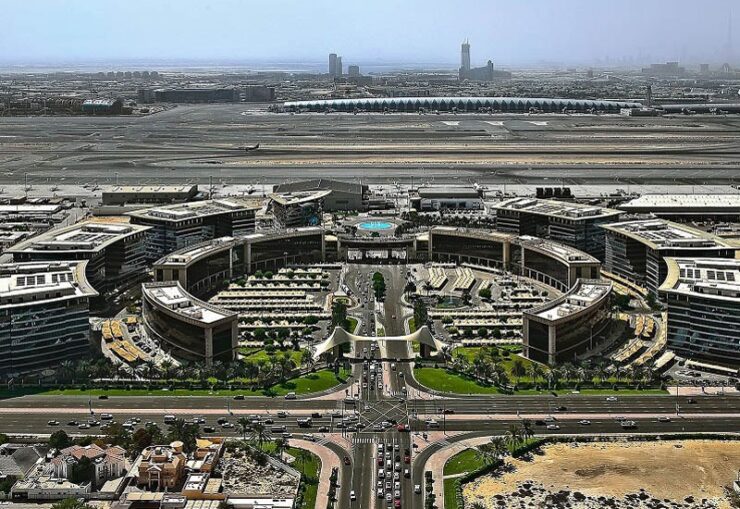
Investors who ship goods or coordinate international teams often choose Dubai free zones because of how closely they sit to major transport infrastructure. Jebel Ali Free Zone borders one of the busiest ports in the region.
Dubai Airport Freezone connects directly to an international aviation hub. Dubai Internet City has proximity to digital infrastructure and a cluster of technology firms.
Did you know?
The World Bank’s Logistics Performance Index consistently ranks the UAE among the highest scoring countries in the region, reflecting the efficiency of customs, infrastructure and international shipment handling.
This level of connectivity creates operational stability. The shorter your logistical chain, the fewer delays you absorb and the better you can plan inventory, service delivery or client coordination.
Cost structure and operational flexibility
Many entrepreneurs compare multiple Dubai free zones because each one maintains its own fee schedule.
The typical cost categories include license fees, registration fees and visa quotas. While these vary, the overall pattern is predictable enough that investors can model their expenses early.
Here is a simplified look at the types of costs companies evaluate:
| Cost Category | Typical Consideration |
| License fee | Determined by type of activity |
| Establishment card | Required for employment processing |
| Visa allocation | Number of employees you expect to hire |
| Office requirements | Flexi desk, shared office or dedicated space |
Companies appreciate that they can scale their setup gradually. A consulting firm might begin with a flexi desk to reduce overhead, then upgrade to a full office once contracts expand.
Access to specialized ecosystems
A distinguishing feature of Dubai free zones is their specialization. Rather than building a single, uniform jurisdiction, Dubai created zones that support particular industries.
Media companies cluster in Dubai Media City. Technology firms prefer Dubai Internet City.
Logistics companies gravitate toward Jebel Ali. This specialization leads to smoother cooperation, clearer regulations and a concentration of relevant service providers.
When choosing between Dubai free zones, many founders consider:
- Industry environment and available partnerships
- Access to skilled labor and contractors
- Whether the free zone’s long term development aligns with their sector
- The availability of accelerator or incubator programs
These elements give companies not only operational space but also a community that understands their challenges.
Visa options for founders and employees

A company established inside Dubai free zones usually gains eligibility to apply for residence visas for its owners and staff. The number of visas depends on the free zone’s allocation rules and the size of the leased office. This structure is particularly helpful for founders relocating teams, as it ties immigration steps directly to the economic activity of the company.
Visa processes are handled through digital platforms, which significantly reduces paperwork. Many zones also support dependent visas, enabling families to relocate under the same structure.
Support services that reduce operational load
While the legal structure forms the foundation, the ongoing day to day needs of a company require practical support.
Many Dubai free zones maintain dedicated service centers to help with renewals, amendments, visa processing and clarifications.
These centers remove friction by giving companies a single point of contact instead of leaving them to navigate the system independently.
It is also common for founders to combine free zone support with external services for accounting, HR or marketing. This hybrid approach helps small teams focus on their core activities while leaving repetitive tasks to specialists.
Long term stability and investor confidence
Dubai free zones have maintained a consistent regulatory environment for years. This stability gives investors confidence that the conditions under which they established their company will not shift unexpectedly.
Transparent laws, clear fee structures and reliable administrative timelines reduce uncertainty for long term planning.
In practice, stability influences decisions such as:
- Signing multi year contracts
- Investing in larger office spaces
- Relocating key staff
- Expanding into new activity groups inside the same free zone
For many founders, this long term certainty becomes a major advantage compared to less predictable jurisdictions.
Conclusion
Dubai free zones were designed to offer more than isolated incentives.
Their value comes from a wider system where ownership clarity, tax benefits, administrative logic, infrastructure, and specialized ecosystems work together.
Investors who prioritize smooth establishment processes, predictable costs and international access often find that these jurisdictions give them the most reliable platform for growth.
As global business continues to shift toward flexible, cross border operations, the advantages offered by Dubai free zones become increasingly relevant.
FAQs
- Can a company in Dubai free zones trade directly within mainland Dubai?
It can trade internationally and within the free zone itself. To trade directly with mainland clients, it typically needs a distributor or a mainland branch, depending on the activity. - Do Dubai free zones require employees to work physically onsite?
This depends on the free zone and the activity. Many zones allow remote or hybrid work arrangements as long as visa and office requirements are met. - How long does it take to establish a company in Dubai free zones?
Timelines vary, but many setups are completed within days once documentation is correct. Complex activities may require additional approvals. - Can companies move from one free zone to another?
Yes, but the process involves closing the current license and opening a new one in the preferred zone. Costs differ by jurisdiction. - Are audited financial statements required for free zone companies?
Several Dubai free zones require annual audited financial statements, especially for companies holding certain license types. Always check the specific compliance rules of your chosen zone.