
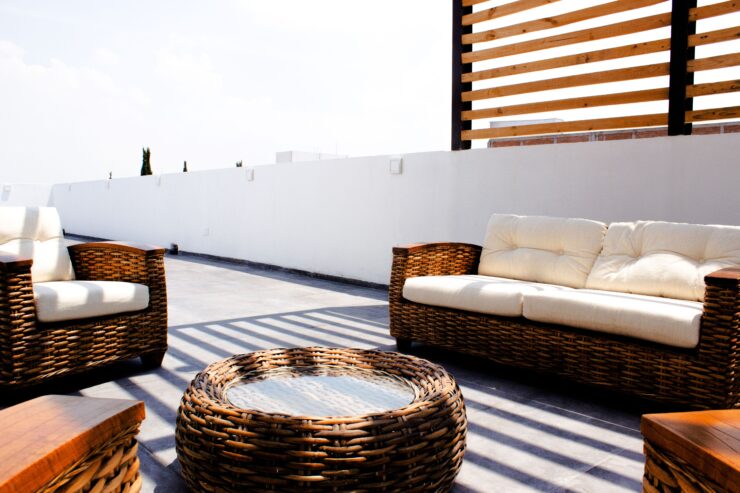
Table of Contents
Outdoor spaces are borrowing the best ideas from fashion and interior design: confident color, tactile fabrics, curved silhouettes and the art of mixing pieces rather than buying a matching set. The trick is not to make a patio look like a living room with no roof. It is to carry a home’s character outside while respecting sun, rain, storage and the garden itself.
That balance is visible in current design coverage. At High Point Market in May 2026, Architectural Digest reported on fully upholstered outdoor sofas, botanical and geometric performance fabrics, and a broader appetite for layered pattern. Those ideas can be adapted at any budget: a well-chosen cushion or lantern can do more than replacing every chair.
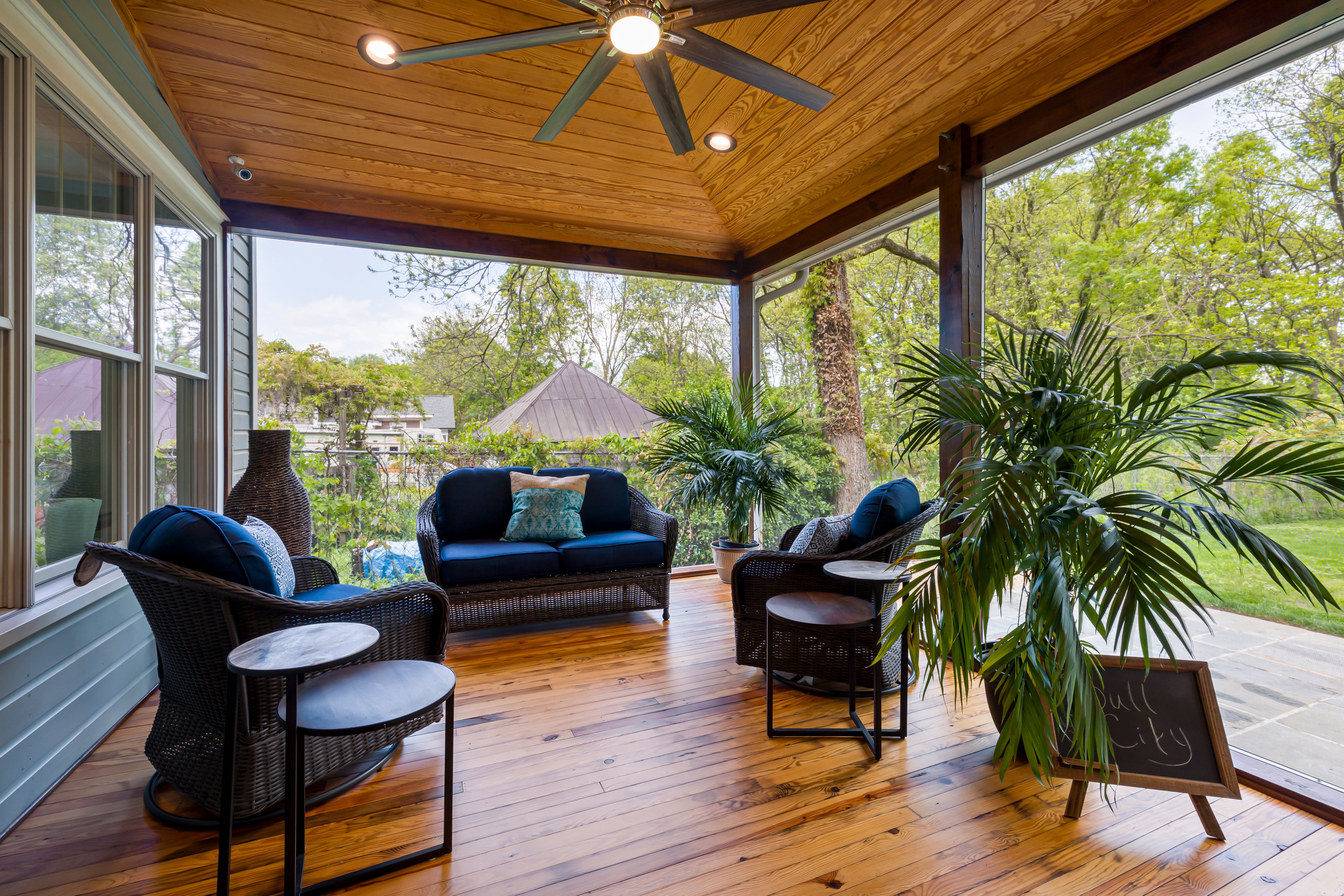
Start with a palette, not a trend
Fashion works through repetition: a color appears again in a shoe, a bag or a small accessory, so the outfit feels deliberate. Apply the same principle outdoors. Pick one or two colors already present inside, then echo them outside in a cushion, planter, umbrella edge or tableware. The connection can be subtle; exact matching is rarely necessary.
For a calm scheme, use a neutral base-stone, warm white, charcoal or natural wood-and let planting provide the green. For a more expressive look, choose a single accent such as tomato red, cobalt, ochre or leafy print. Repeating that accent in two places is often enough. A third appearance can tip the scheme from intentional to themed.
Think of the garden as a print in the room. Leaves, shadows and flowers already create pattern and movement. A bold textile works best when it joins that composition instead of competing with every plant.
Textiles: the outdoor equivalent of getting dressed
Outdoor fabric is no longer limited to a single flat stripe. The 2026 High Point Market report from Architectural Digest describes designers bringing softer, more residential upholstery outdoors, including botanical and geometric performance fabrics. For a home-scale version, combine one noticeable pattern with quieter solids and different textures: a stripe beside a small-scale floral, or a plain seat cushion with a woven lumbar pillow.
Textiles are also the easiest way to change the mood seasonally. Try this simple formula:
- Keep large pieces steady. A neutral sofa or bench is easier to live with than a large, high-contrast print.
- Put the fashion moment in removable layers. Cushions, a washable outdoor rug or table linens can carry the color or pattern.
- Check the care label and storage plan. “Outdoor” does not mean every cushion can be left exposed all year. Confirm cleaning instructions and whether covers are removable before buying.
In a small courtyard, one patterned pair of cushions may be enough. On a larger terrace, a rug can define a seating zone much as it would in a living room. Either way, texture matters as much as print: woven rope, slubbed fabric, smooth stone and timber give the eye something to move across without adding more colors.
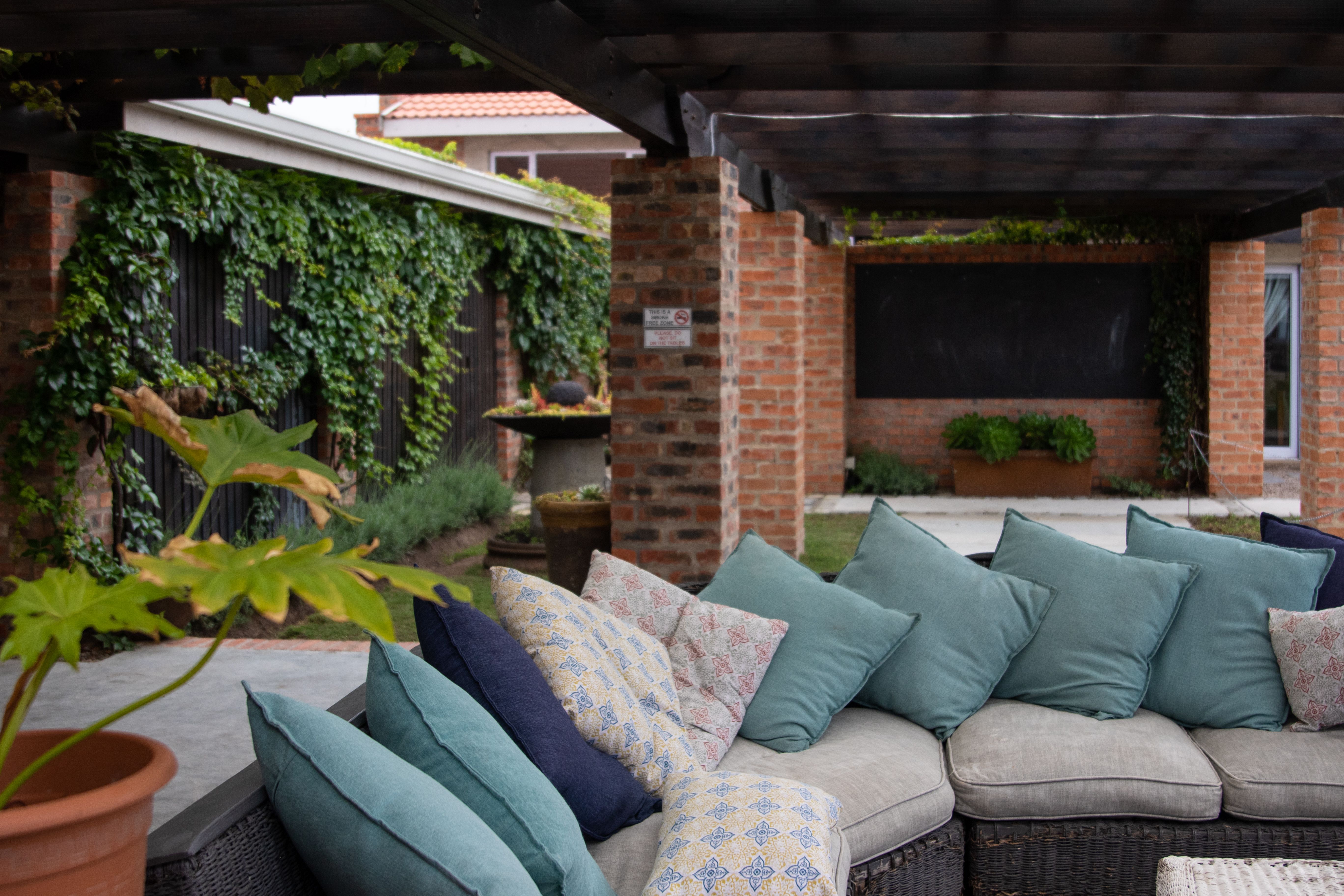
Shape and material make the room
Soft, rounded seating is a useful counterpoint to the straight lines of decking, paving and brick. Curved forms make a seating area feel more conversational, while a sculptural side table or a woven chair can provide a focal point without needing a dramatic color. In 2026, market coverage has also highlighted the return of tactile weaving and outdoor furniture with the comfort and presence of indoor pieces.
Mixing materials is more convincing than buying a complete suite when each piece has a clear role. Pair a simple timber table with woven chairs, or put a slim metal bistro set beside generous planters. Rattan and bamboo bring an easy, crafted look; stone and ceramic add visual weight; timber warms a space that might otherwise feel hard.
Consider the view from indoors, too. The line around a raised deck or terrace is part of the composition, not merely a boundary; well-chosen balustrades can help that edge read as an intentional architectural detail. The same principle applies to paving joints, planters and screening: repeated finishes make the transition between house and garden feel coherent.
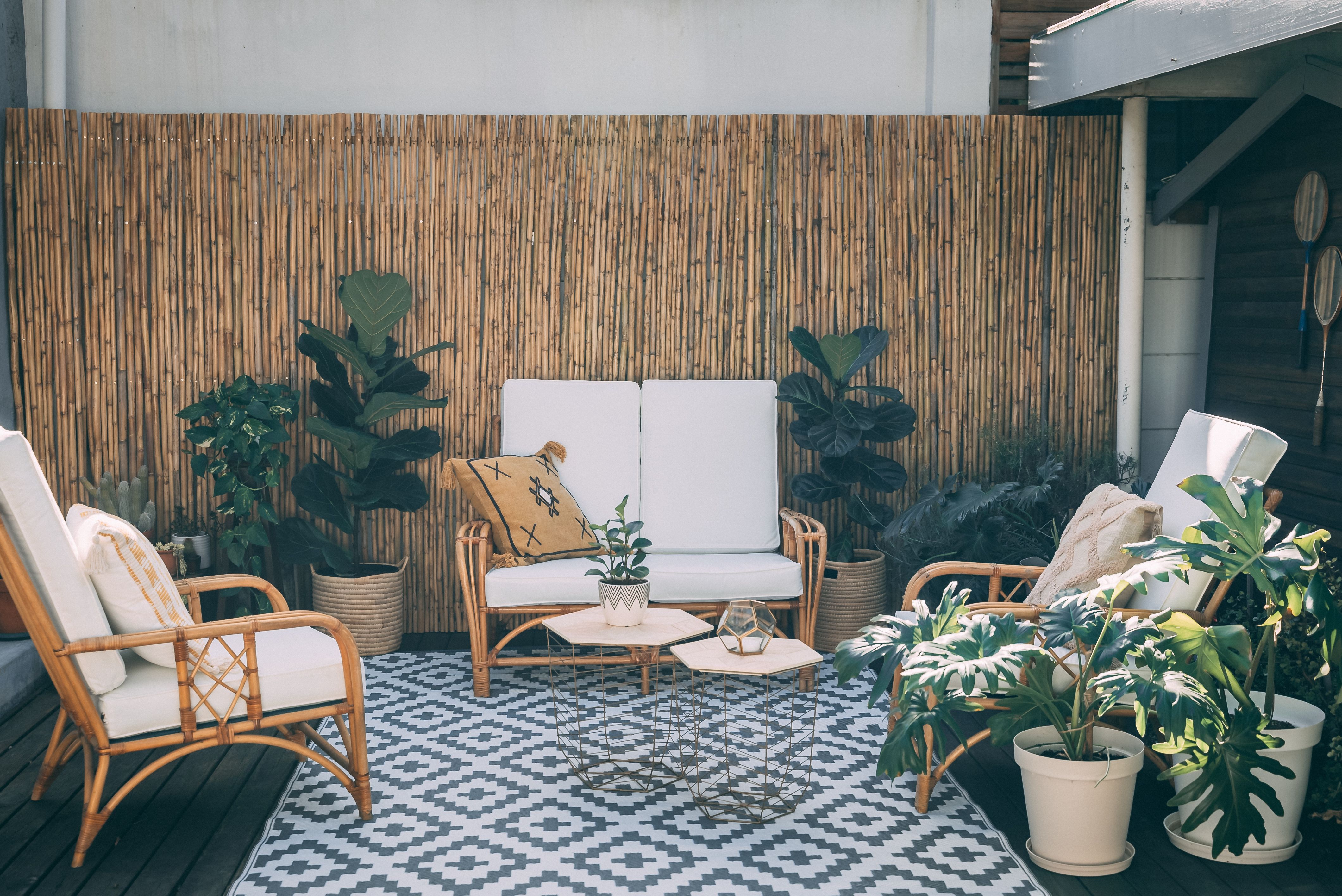
A quick material and care guide
The most stylish choice is the one that suits both the look you want and the maintenance you will actually do. The Royal Horticultural Society’s garden-furniture advice makes clear that care differs by material; use this comparison as a starting point and follow the maker’s instructions for a specific piece.
| Material | Design character | Practical care point |
|---|---|---|
| Hardwood, such as teak | Warm, relaxed and naturally textured | The RHS says oily hardwoods are weather resistant. Teak weathers from golden brown to silvery grey; washing with soapy water once a year helps remove surface growth. |
| Treated softwood | Casual, cottage-like, and easy to paint or stain | Expect more regular upkeep: the RHS advises cleaning and reapplying preservative stain or paint about yearly, or sooner if needed. |
| Metal furniture | Tailored lines, from traditional ironwork to simple modern frames | Inspect for rust or coating damage, clean it, and protect affected areas. The RHS recommends repainting every two to three years to maintain the weather barrier. |
| Plastic | Lightweight and visually simple, with color options | Clean with soap and water. The RHS notes that strong sun or winter exposure can make plastic brittle over time, so storage may help. |
Care guidance summarized from the Royal Horticultural Society’s garden furniture maintenance guide.
There is a real trade-off here. A heavily upholstered, styled lounge can look inviting and feel comfortable, but it asks more of its owner than a bare bench: cushions may need to be brought in, covered or cleaned. My preference is to invest in comfortable seating where it will be used most, then keep the decorative layers removable. That preserves the softness without making the entire patio a storage problem.
Finish with layout and considerate lighting
Interior design often separates a room into zones; outdoor layouts benefit from the same clarity. A small rug or furniture arrangement can signal a lounge area, while a dining table belongs where there is a convenient route to the kitchen. Leave a clear path between the door and the main seating rather than arranging furniture only for a photograph.
Lighting is another interior detail that needs an outdoor edit. The RHS advises keeping garden lighting restrained to avoid disturbing wildlife and neighbors. Where light is needed for safety, favor low, warm illumination directed across steps and paths, and switch decorative lights off when they are no longer needed. Candles or a portable lantern can provide atmosphere without turning the whole garden bright.
- Use one main seating group as the anchor, then add a side table within easy reach.
- Keep the walking route from the house uncluttered, especially around doors and steps.
- Use plants, a screen or furniture backs to create privacy rather than filling every corner with decor.
- Choose lighting for a specific purpose, and avoid shining it upward or toward neighboring windows.
For terraces and balconies, the same rules scale down: a compact bistro set, one larger pot and a single patterned textile can create a complete visual idea. A small space does not need miniature versions of every trend.
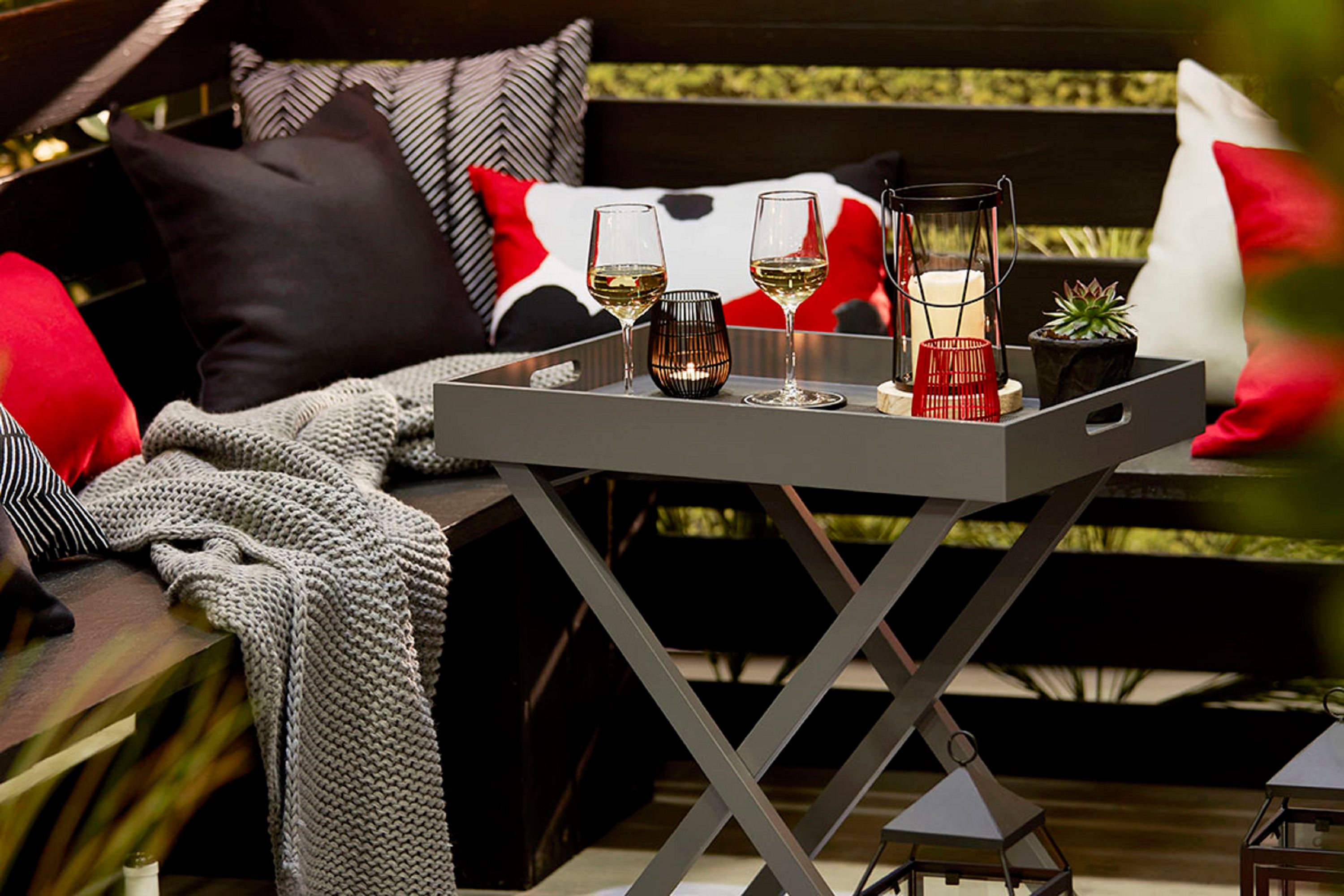
A small refresh that feels considered
If a full redesign is not on the agenda, start with what is already working. Clean the furniture, move the seating to improve the view or conversation, and remove anything that does not serve the space. Then add one element that brings the indoor palette outside: a pair of cushions, a textured planter, or a small outdoor rug.
Before buying, ask three questions:
- Does this color or material connect to something already in the house or garden?
- Will it cope with the actual exposure on this patio, balcony or deck?
- Where will it go when it needs cleaning or protection?
Fashion gives an outdoor room personality; interior design gives it structure. The garden supplies the part neither can imitate: living texture, changing light and the pleasure of being outside. A successful space lets all three contribute without forcing nature to become a backdrop.
Frequently Asked Questions
1. What are the biggest outdoor living trends right now?
Current design coverage points to softer upholstered seating, expressive performance fabrics, woven textures and sculptural silhouettes. The most lasting approach is to borrow one or two of these ideas rather than redesign around every new trend.
2. How do I make my patio feel connected to my interior?
Repeat a color, material or shape from inside the home outdoors. The connection can come from cushions, planters or tableware; the pieces do not need to match exactly.
3. Which outdoor textiles should I choose?
Choose fabrics labeled for outdoor use and check their cleaning and storage instructions. Use a restrained base and introduce stronger color or pattern through removable cushions, rugs or table linens.
4. How can I make a small balcony look thoughtfully designed?
Keep circulation clear, choose compact seating that fits the way you use the balcony, and repeat a limited palette. One patterned textile and a few well-placed plants can do more than many small accessories.
5. What is the best way to light an outdoor living area?
Start with safety: use low, warm light across paths and steps, and keep decorative lighting restrained. The RHS recommends minimizing garden lighting to protect nocturnal wildlife and avoiding bright light directed upward or toward neighbors.